
How Air Crash Investigators Made Flying Safe
Air crash investigators do not look for someone to blame. Since 1951, the international rule - ICAO Annex 13 - has required the opposite: find the cause, and only the cause, because a crew that fears prosecution has every reason to hide the truth from the people trying to prevent the next crash.
This video explains how that rule turned seventy years of wreckage into the safest form of mass travel ever built. A Boeing 767's two recorders, read within three days of a Miami runway overrun in September 2026. A Comet airliner's fuselage, lowered into a water tank at Farnborough in 1954, to find the metal fatigue that was breaking up the world's first jet airliner. An Australian chemist, building the first flight recorder in his own garage because nobody else saw the point. A captain at Tenerife in 1977, whose fatal certainty went unchallenged by his own crew, and the training - Crew Resource Management - that case created. Air France 447, recovered from nearly four kilometres down after a two-year search. The 737 MAX's MCAS, and the formal objections two governments filed against a third government's own final report.
Each case changed one thing. Together, they are why ICAO's 2025 safety report puts the fatal accident rate at 0.11 per million flights.
But the video does not stop there. An aircraft lost in 2014 is still missing. Final reports can still take years. Cockpit voice recorders on many aircraft still in service record only a two-hour loop. And right now, in 2026, India's investigation into Air India Flight 171 - 260 dead, both fuel switches found moved to CUTOFF seconds after take-off - is the live test of everything this video describes: a preliminary finding made public within a month, and a final report still not published more than a year on.
Is the system that grew out of a 1944 conference in Chicago still moving forwards? This video makes its own case, and leaves the verdict on Air India 171 open, because it still is.
In these topics
Tags
Chapters
- Five minutes after a crash
- Why investigators don't blame
- The Comet and the water tank
- Inventing the black box
- From wreckage to cause
- Tenerife and the cockpit
- Air France 447: two years on the seabed
- The 737 MAX
- Why flying is now so safe
- Where the system is weak
- Air India 171: the test now
- Forwards or backwards?
Video notes
1. Five minutes after a crash
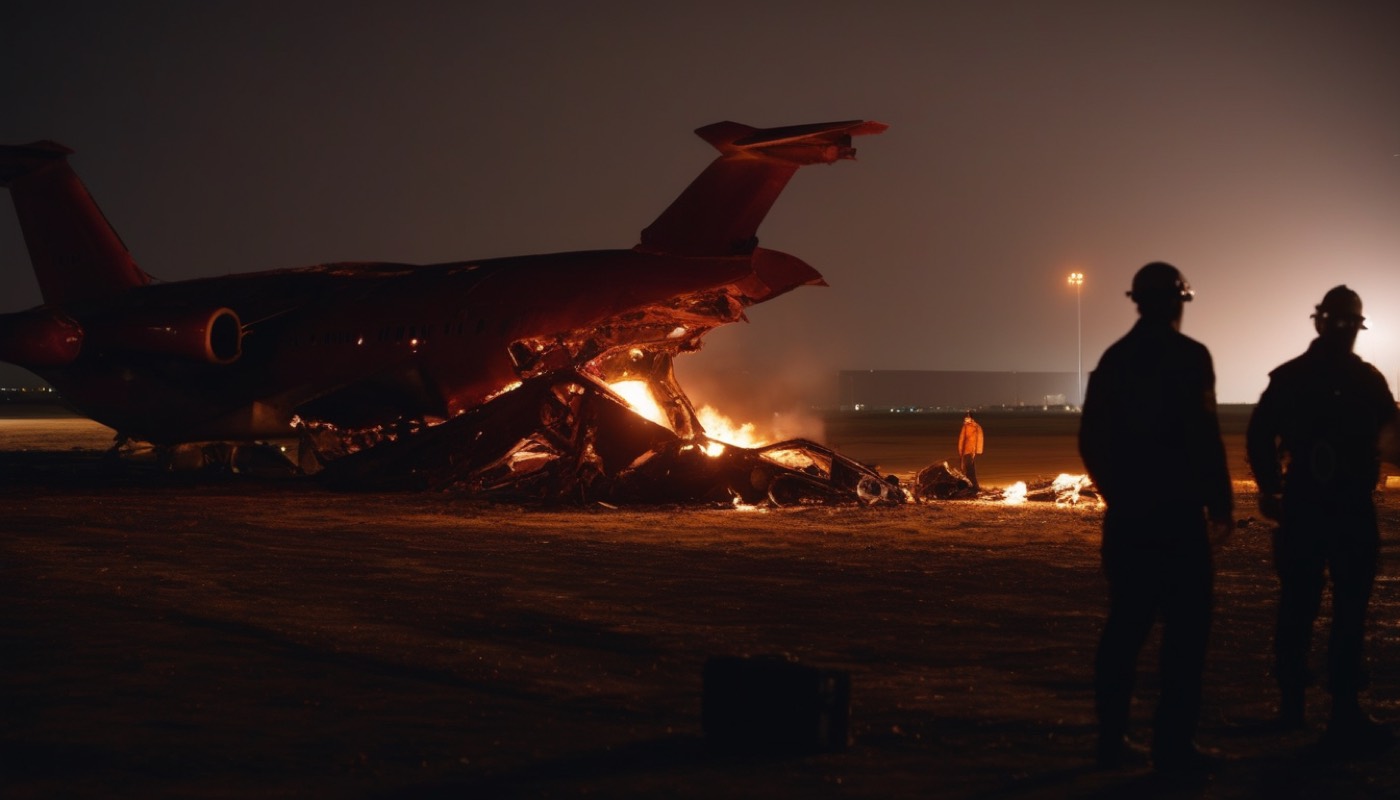
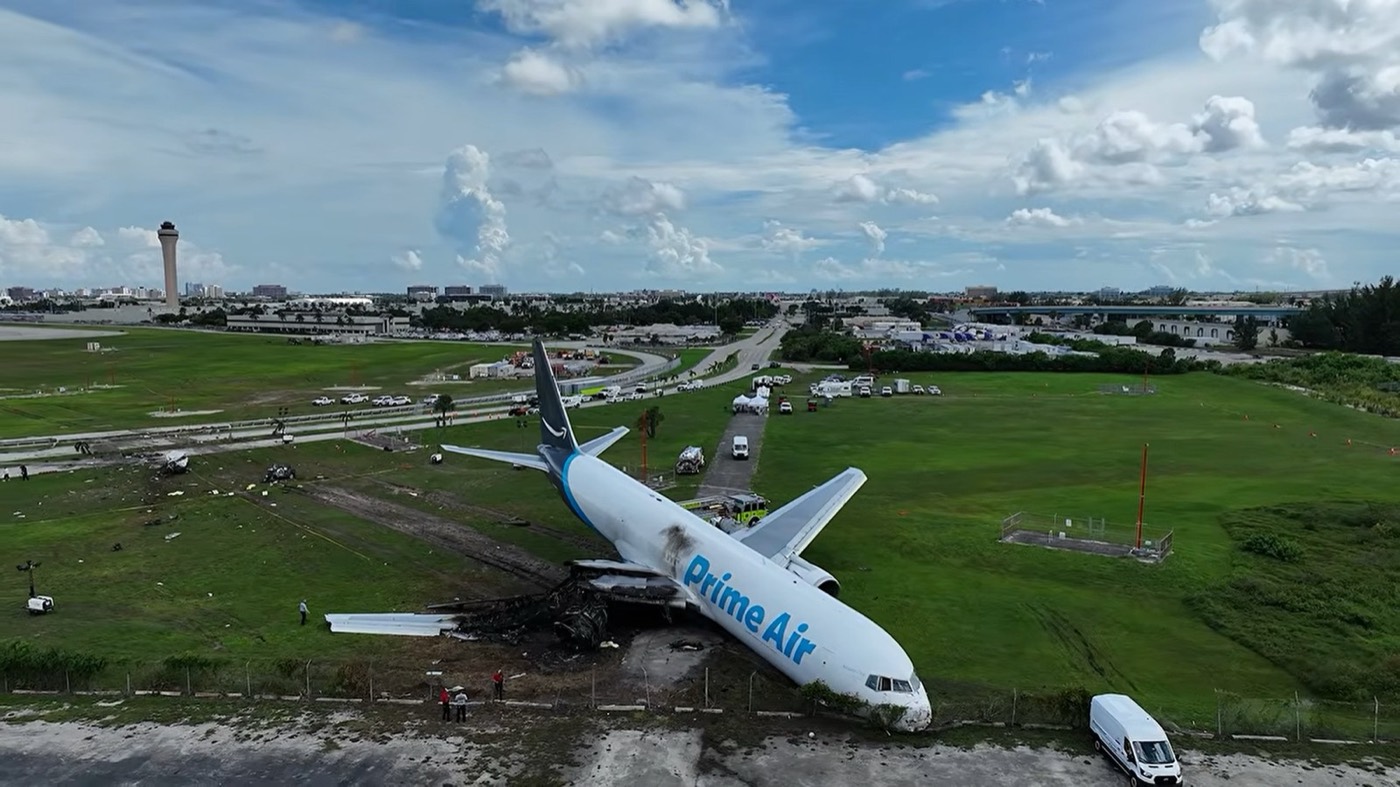
On the morning of 6 September 2026, a cargo jet overran the runway at Miami International Airport. It caught fire, and struck a building nearby. Five people on the ground were killed. Within hours, a team of federal investigators was already on a plane to Miami.
This is the wreckage of the Miami crash site, flown by 21 Air. It was a Boeing 767 freighter, Flight 7598. The National Transportation Safety Board, the NTSB, sent a go-team. A go-team is a standing roster of specialists in recorders, structures and human performance. Their whole job is to be airborne within hours of a major US accident, before the wreckage has even stopped smoking.
The aircraft carried two recorders. A flight data recorder logs the numbers: speed, altitude, engine settings, every control input the crew made. A cockpit voice recorder captures the audio inside the cockpit itself. Both are built to survive the crash that makes them necessary, and reading them is usually the fastest, hardest evidence an investigation gets.
Three days later, the NTSB released what those recorders had shown. The jet touched down fast, and its brakes came on only a little slower. "No indication in the reported data that speed brakes or thrust reversers were deployed," the lead investigator said. A partial transcript of the cockpit voice recording came out that same day, alongside the flight data.
That is the modern standard this video is going to explain. Two recorders, both read within three days. Preliminary findings made public before the runway is even fully cleared. A written preliminary report will follow. None of that speed is automatic, and none of it existed a century ago. It is the end result of seventy years of crashes that were investigated, argued over, and turned, one at a time, into rules.
2. Why investigators don't blame
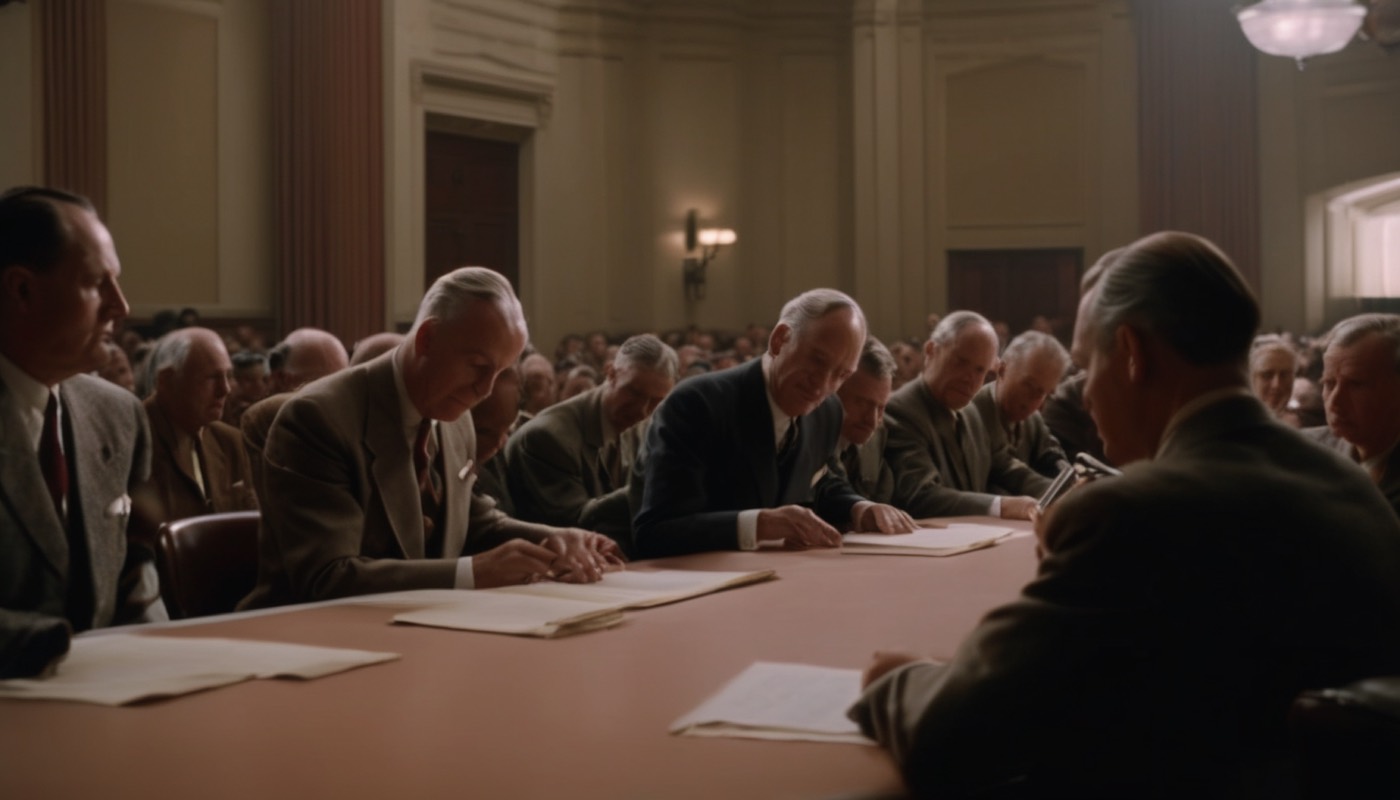
Every one of those rules traces back to a single sentence, written after the Second World War, that decided how an investigation is even allowed to work.
Delegates from fifty-two countries met in Chicago in December 1944 to set the terms for civil aviation once the fighting ended.
The Chicago Convention they signed requires the country where a crash happens to investigate it. Seven years later, the newly formed International Civil Aviation Organization adopted the document that governs exactly how. It is called Annex 13.
Annex 13 states its purpose, and what it is not for, in one line each. "The sole objective of the investigation... shall be the prevention of accidents and incidents." And it is explicitly "not the purpose... to apportion blame or liability." That sentence is why, in nearly every country that flies aircraft, a crash investigation and a criminal or civil case are kept legally separate.
The reasoning behind it is practical, not sentimental. A pilot, a mechanic or an engineer who fears prosecution has a strong reason to hide a mistake, or shade an account of what happened. An investigator who is hunting only for the cause, never for someone to punish, has a far better chance of being told the truth by the people who were actually there. Annex 13 is now in its thirteenth edition, and almost every state that operates aircraft has signed on to it.
Everything in the rest of this video happened because that one principle held, case after case, for decades.
3. The Comet and the water tank
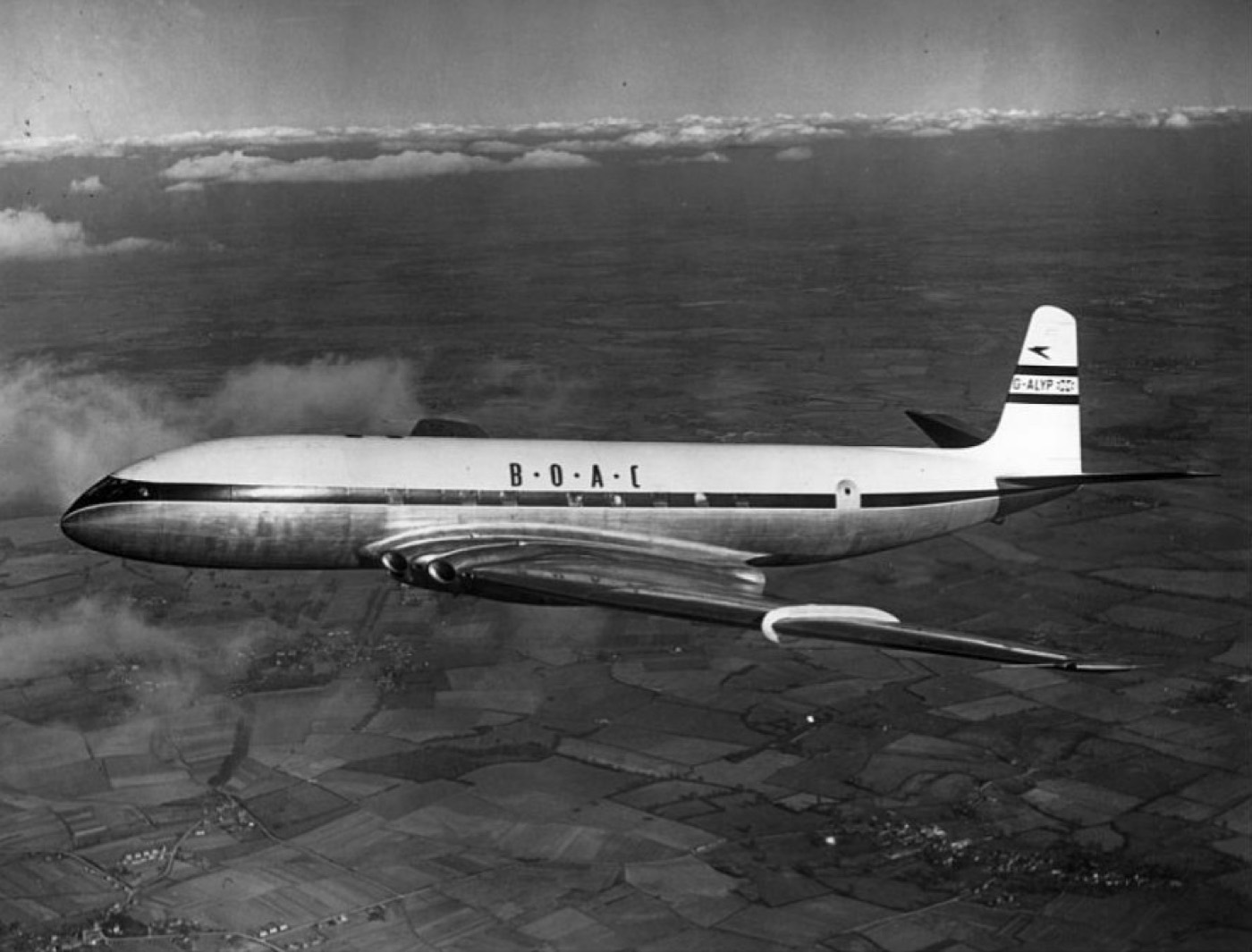
The first great test of that principle came with the world's first commercial jet airliner, and it very nearly ended the jet age before it began.
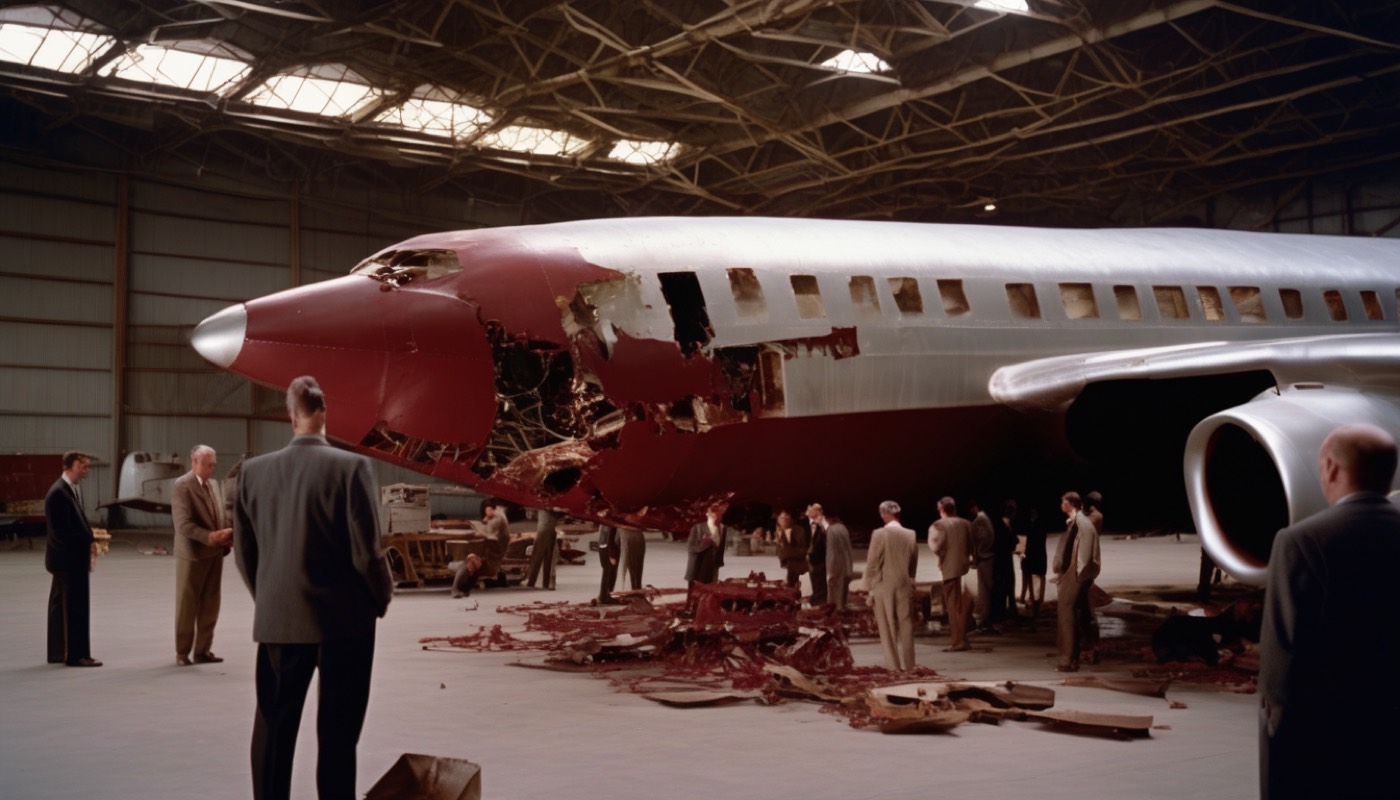
This is BOAC's de Havilland Comet 1, registration G-ALYP, nicknamed Yoke Peter. It broke apart in mid-air over the Mediterranean, off the Italian island of Elba, in January 1954. All 35 people aboard were killed. It was the second Comet lost that year, and when a third went down near Naples, the whole fleet was grounded while investigators worked out why.
Salvage crews spent months recovering pieces of Yoke Peter's fuselage from the seabed. They pieced it back together on a hangar floor, almost sheet by sheet, the way a broken vase is rebuilt from fragments. That painstaking reconstruction pointed toward the skin around the aircraft's windows. To prove it, engineers at the Royal Aircraft Establishment in Farnborough took a second, still-intact Comet fuselage. They lowered the whole thing into a purpose-built water tank.
Submerged in that tank, the fuselage was repeatedly pressurised and depressurised. Cycle after cycle, it copied what happens every single time a jet climbs to altitude and comes back down again. Eventually, a crack appeared at the sharp corner of a window cut-out, and it grew, matching the failure investigators had already found in the recovered wreckage. The cause was metal fatigue: tiny cracks that lengthen a little with every pressurisation cycle, invisible for thousands of flights, until the structure finally fails all at once.
The fix reached every jet built afterward. Square window corners were replaced with rounded ones across the whole industry, because a sharp corner concentrates stress at a single point, where a curve spreads that same stress out. Fatigue testing became mandatory too. A structure is now cycled to breaking point in a laboratory, long before it ever carries a paying passenger. A single failure mode, proven inside a water tank, changed how every pressurised jet since has been designed and tested.
4. Inventing the black box
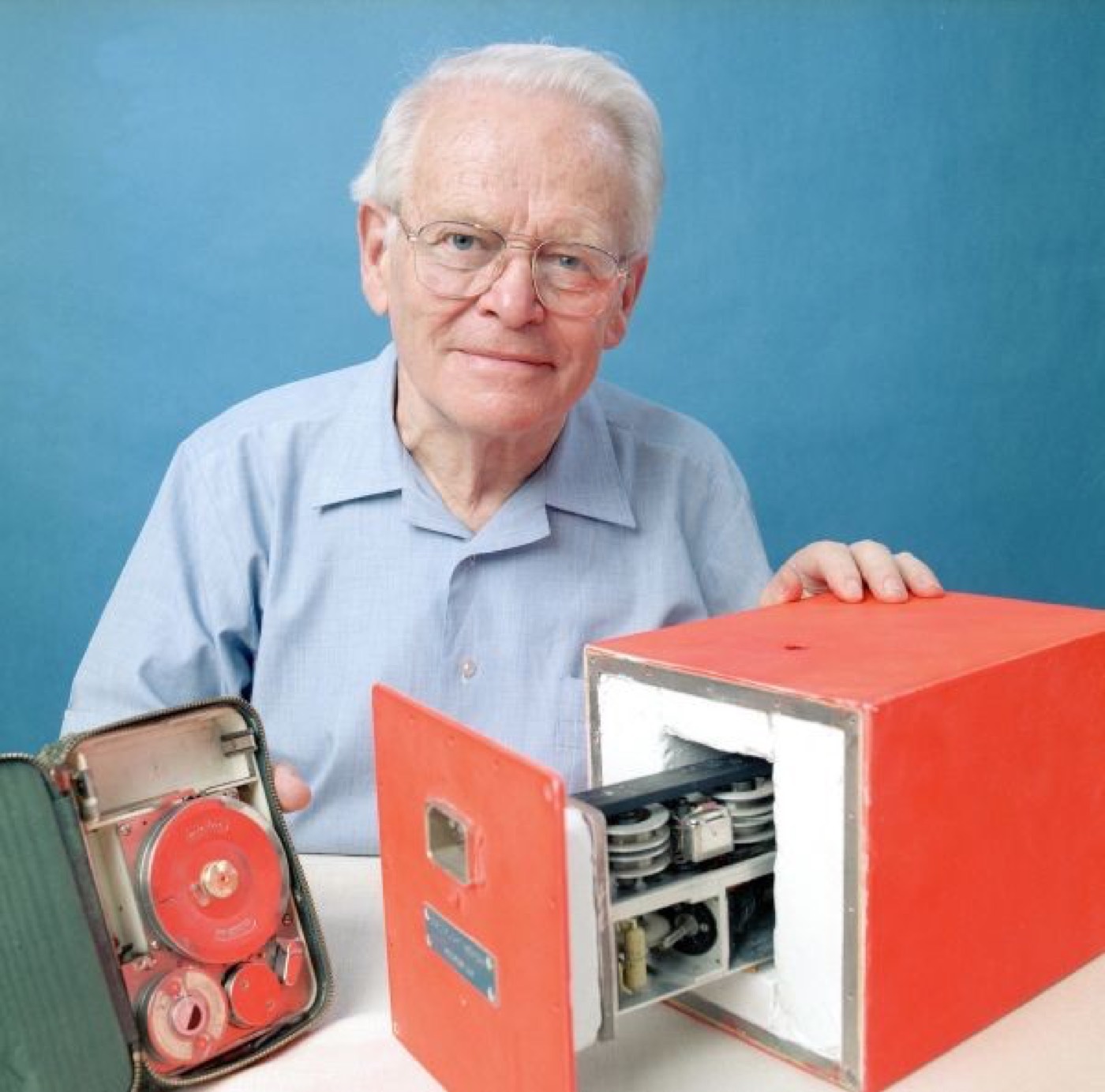
The Comet inquiry produced a second legacy almost nobody notices, because its inventor worked on it largely alone, with almost no support from his own employer.
David Warren was a chemist at Australia's Aeronautical Research Laboratories in Melbourne, working on the same Comet losses, when he happened to see a small wire recorder at a trade show. He wondered whether a similar device could capture an aircraft's last moments of flight, and its cockpit conversation too, giving investigators something far better to read than scattered wreckage. He built a working prototype by 1957, mostly on weekends in his own garage, because his employer showed little early interest.
What Warren invented is what everyone still calls, slightly misleadingly, the "black box." The unit is actually painted bright orange. That is deliberate, so it can be spotted in wreckage. A modern flight data recorder logs hundreds of numerical readings continuously: altitude, airspeed, heading, engine settings, and every control input a pilot makes. A cockpit voice recorder captures the audio inside the cockpit, everything said and heard on the flight deck.
Both instruments are built to survive the crash that made them necessary in the first place. Their memory sits inside a crash-protected case. It is designed to withstand fire, deep-sea pressure and severe impact. Each recorder also carries an underwater locator beacon, sometimes called a pinger, that keeps transmitting a signal even after the aircraft has gone down and out of sight.
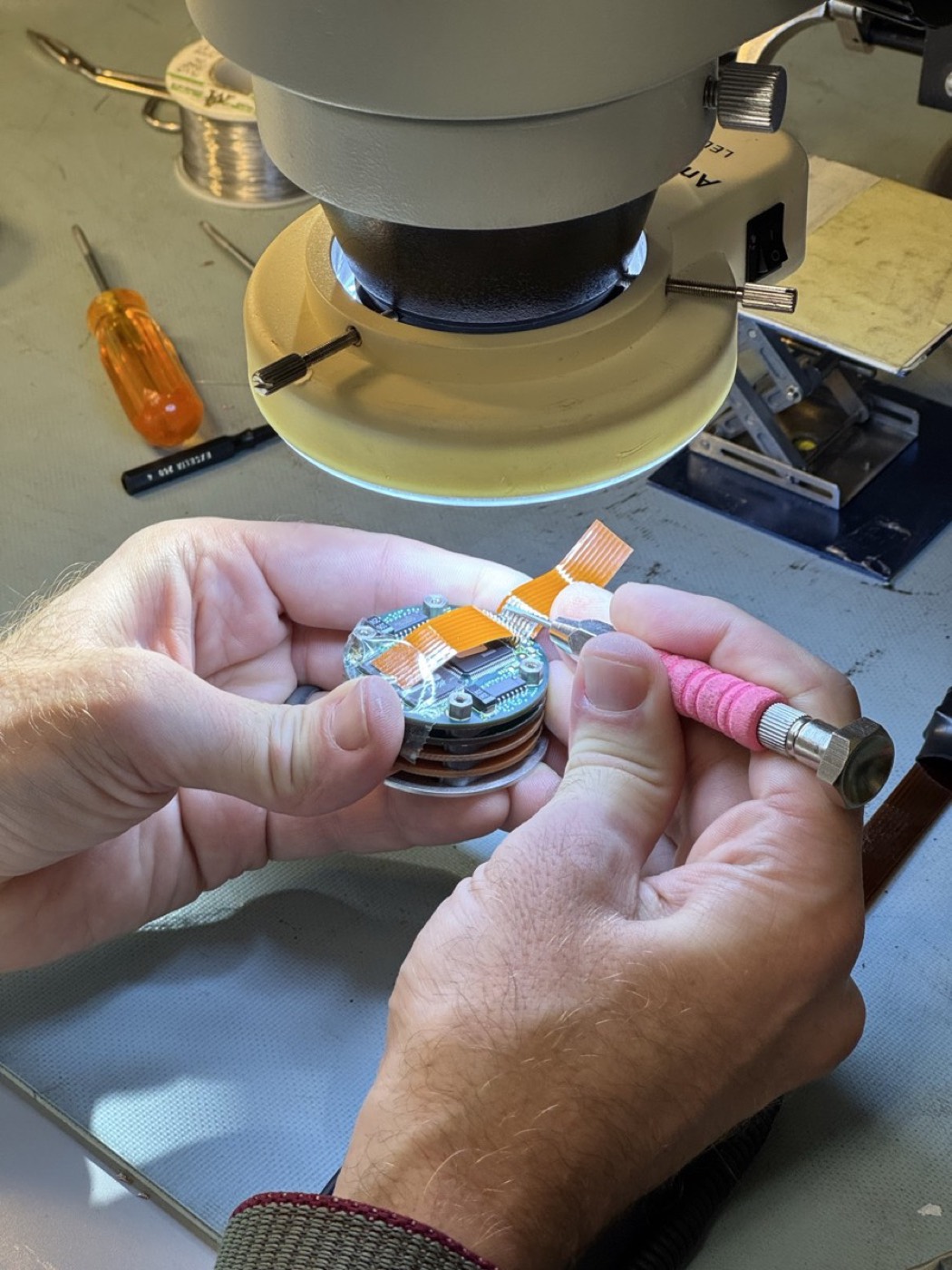
The idea began in Melbourne. It is still tested, decades later, in a laboratory in Washington.
This is an NTSB specialist examining a recovered recorder's circuit card, in the agency's Washington laboratory, from a 2025 crash. Recorder work like this is still a specialist trade, decades after Warren first built his prototype in a garage. It means reading physical memory that has survived fire, saltwater or a violent impact.
Warren's own country was slow to see the point of his invention. Australia mandated cockpit voice recorders on commercial aircraft in 1967, one of the earliest countries in the world to do so. The rest of global aviation followed over the years after.
5. From wreckage to cause
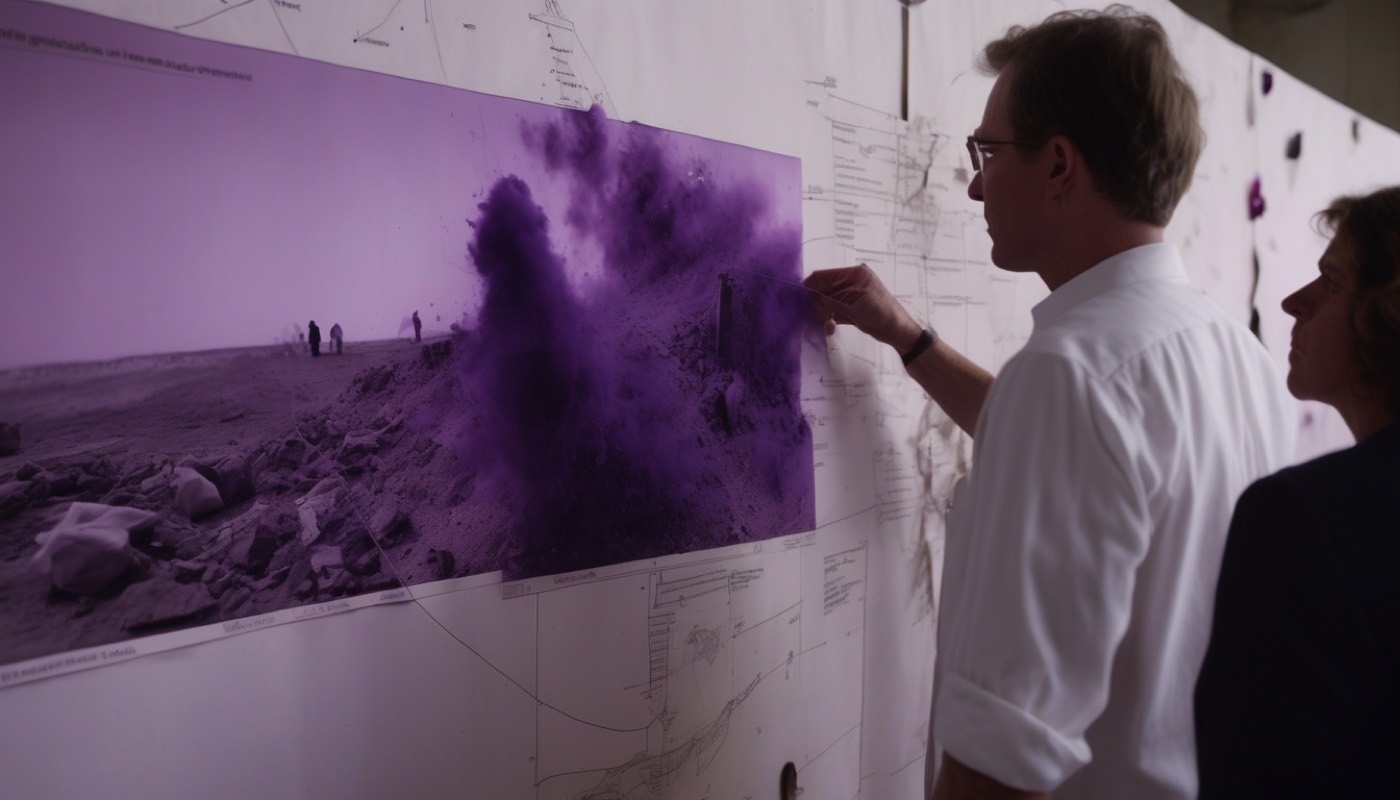
Annex 13 does not just say investigate. It sets out, in real procedural detail, exactly how that is supposed to happen, from the first hour to the final page.
A modern investigation starts at the site itself. Investigators map where every piece of wreckage came to rest, because that pattern, scattered across the ground or the seabed, can show how an aircraft broke apart before it ever struck anything. Increasingly, that mapping is done with photogrammetry, turning thousands of individual photographs into a single precise 3D model of the wreckage field.
From the site, the recorders and any recovered components go to dedicated laboratories, the kind of facility shown in the previous chapter. Engines, control surfaces and structural parts are tested separately, often to destruction, to see exactly how and where each one failed. All of that evidence, from the site, the recorders and the labs, feeds into a single written report. It moves from raw data, to a draft, to review, and finally to a published finding.
Annex 13 sets two clocks running from the moment of the crash. A preliminary report is expected within thirty days, giving the public an early, factual account before analysis is complete. A final report is meant to follow within twelve months. When a state cannot meet that year, and many cannot, Annex 13 requires a status update on every anniversary instead — which is exactly the position two of this video's later chapters are still in.
That method, site to recorder to laboratory to report, is now common to nearly every serious air accident investigation on earth. What differs from case to case is not the method itself. It is what the method finds, and what happens to the finding once it exists.
6. Tenerife and the cockpit
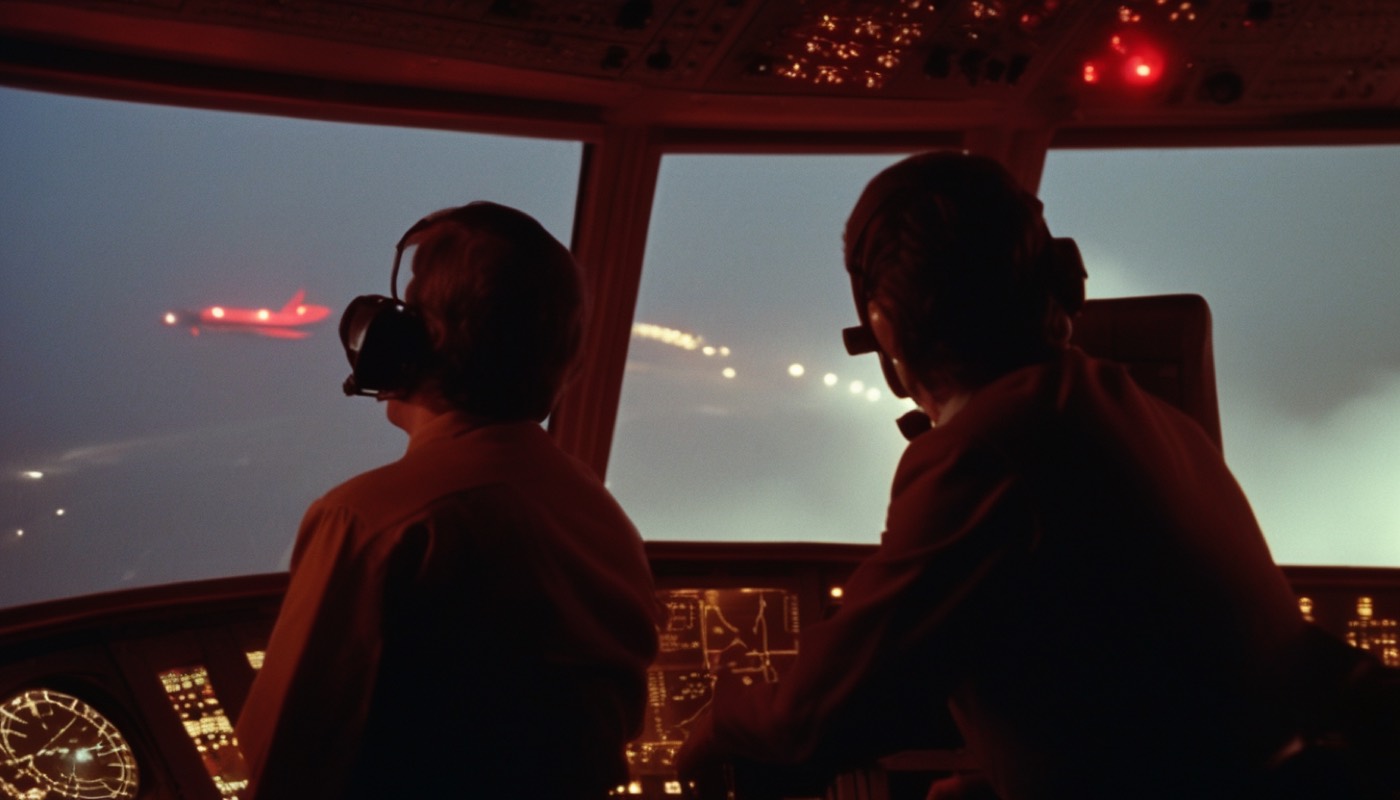
Sometimes what the method finds is not a broken part at all, but a moment inside the cockpit that no test tank or laboratory could ever have shown.
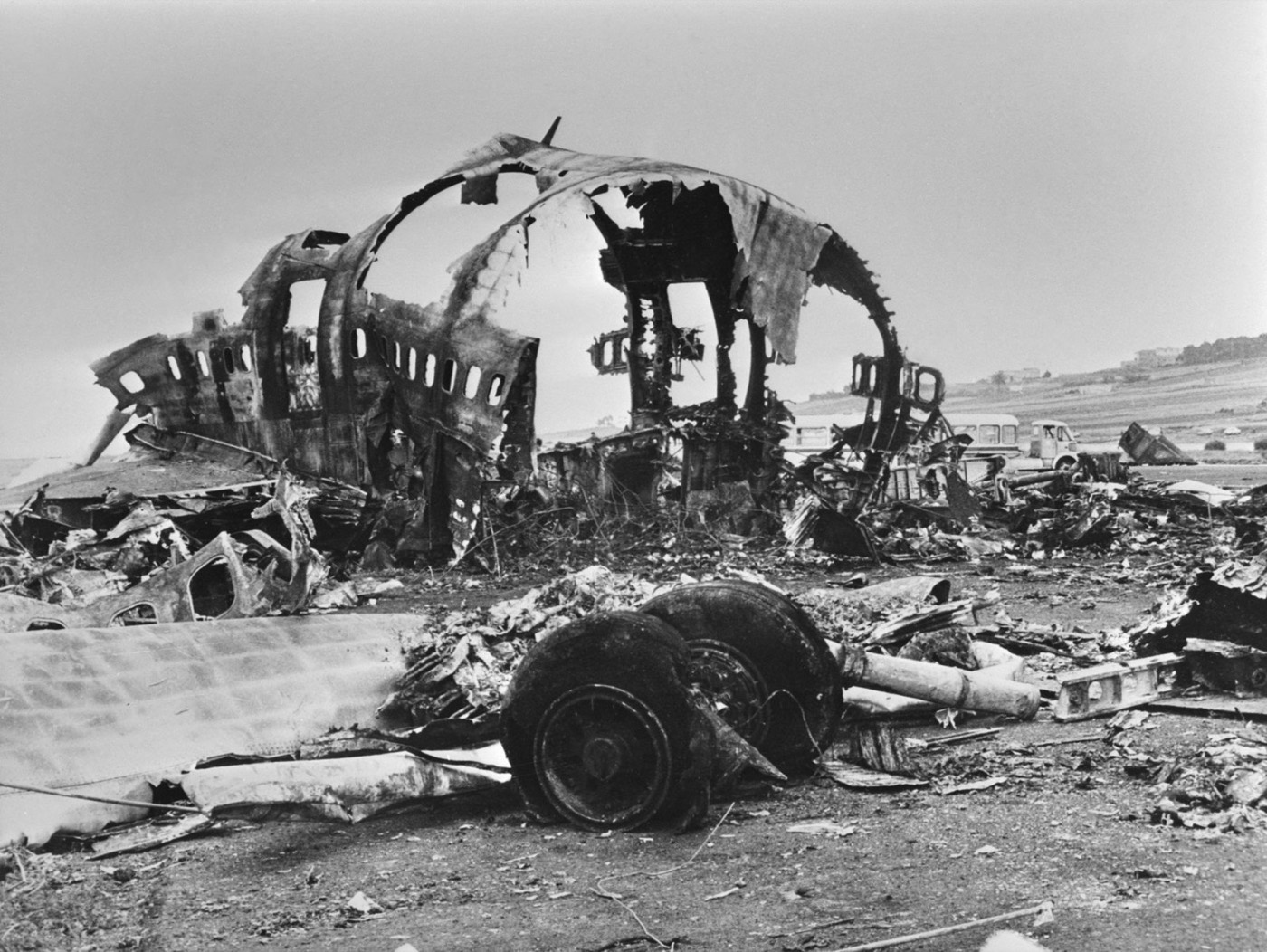
Two Boeing 747s collided on a runway in the Canary Islands, in March 1977. One was a KLM flight from Amsterdam. The other was a Pan Am flight from Los Angeles. Both had been diverted there after a bomb threat closed their intended destination on a nearby island, and thick fog had settled over the airport by the time they met.
Investigators found no broken structure and no failed engine. What they found instead was a breakdown of communication inside a single cockpit. The KLM captain began his take-off roll believing, wrongly, that he already had clearance from air traffic control. His own flight engineer had real doubts about that, and the first officer's radio exchange with the tower was left unresolved. Neither of them stopped the captain before he opened the throttles.
583 people were killed. It remains the deadliest accident in aviation history. The cause was a highly experienced, respected captain's mistaken certainty. His own crew did not challenge him, in fog neither aircraft could see through.
That finding became the founding case for what aviation now calls Crew Resource Management, or CRM. CRM trains every crew member, whatever their rank, to speak up clearly when something looks wrong, and it trains captains to actually listen when they do.
CRM is now mandatory training for airline crews almost everywhere in the world, refreshed throughout a pilot's career rather than taught once. It did not come from a redesigned part, a new sensor, or a rewritten checklist. It came from a captain who was wrong, and a crew who did not stop him in time to matter.
7. Air France 447: two years on the seabed
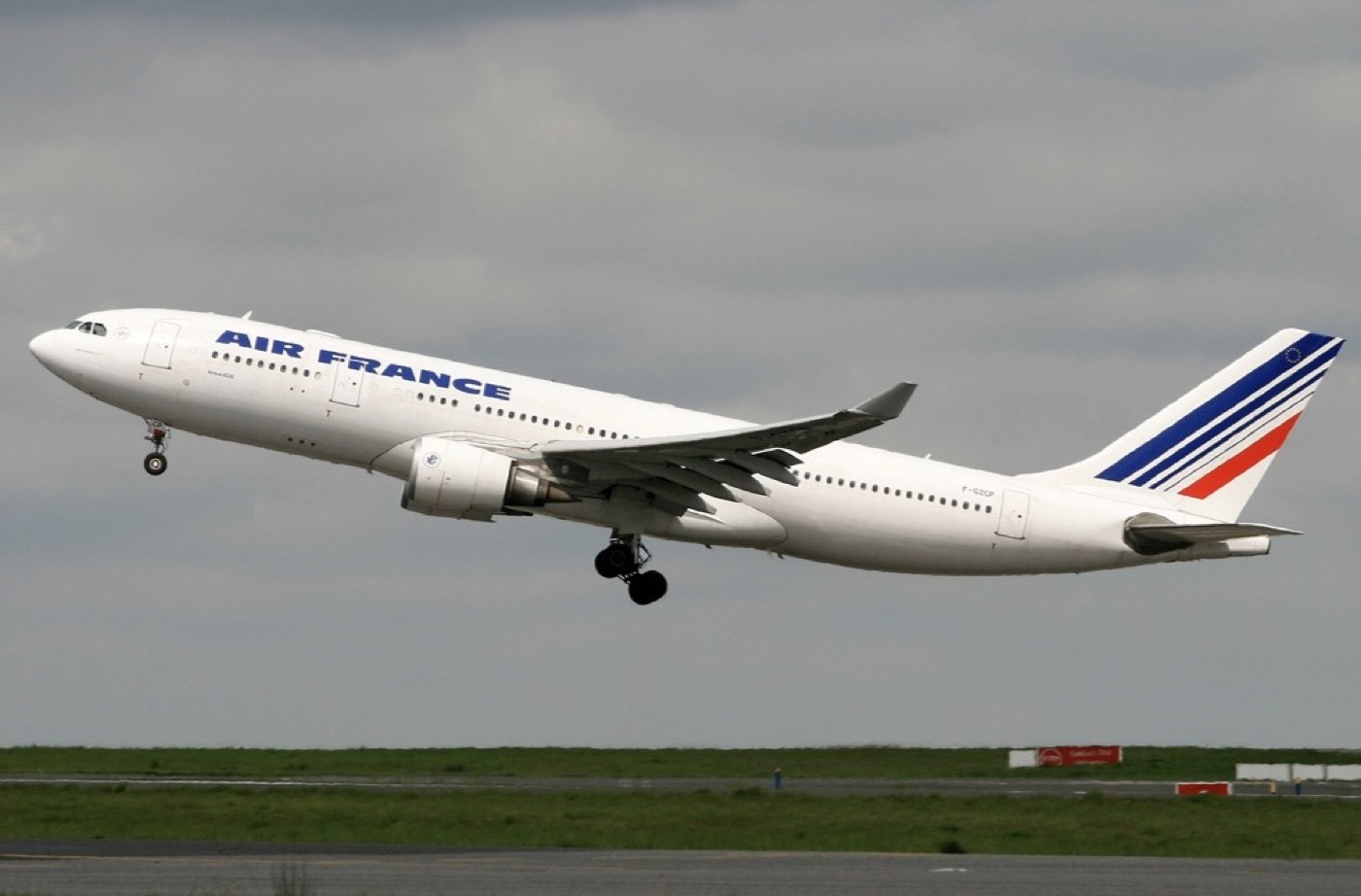
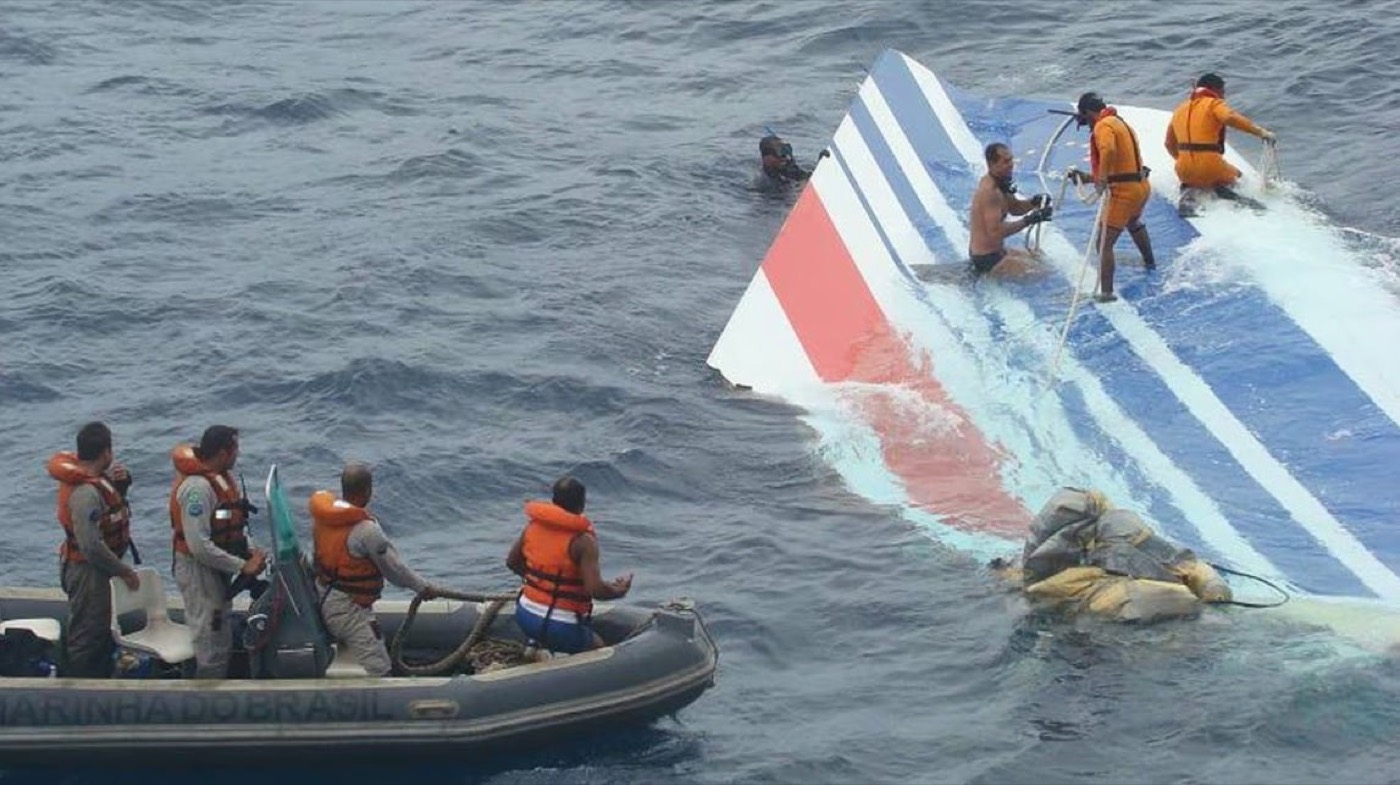
Not every investigation gets to start with wreckage laid out on land, or even on a runway.
Air France Flight 447 was flying overnight from Rio de Janeiro to Paris when it crashed into the Atlantic Ocean. It went down in June 2009. All 228 people aboard were killed. Ice crystals had blocked its external speed sensors high over the ocean.
The crew was left with conflicting airspeed readings, and then no readings at all. Confused, they held the aircraft in an aerodynamic stall: nose up, engines still running, falling almost straight down, all the way into the water below.
The wreckage lay roughly four kilometres down. That was well outside the search area investigators first tried, which had been chosen from where the debris was likely to have drifted, not from where the aircraft actually went down. Three separate search phases, over nearly two years, found nothing at all. A fourth attempt finally succeeded, using a new method that mapped the seabed systematically instead of guessing at drift.
The two recorders were recovered from a depth of almost 4,000 metres. That happened in May 2011, nearly two years after the crash. It remains one of the longest and most difficult recorder searches in aviation history, and for two years investigators had almost nothing but theories about what had actually happened in that cockpit.
Once the recorders were finally read, they showed exactly what had gone wrong during those last, confused minutes. The BEA's final report followed in 2012, and it led directly to two lasting changes across the industry. Airline pilots worldwide now train specifically for high-altitude stall recovery, something once treated as almost unthinkable in a modern airliner. And new international rules now require longer-lasting underwater locator beacons, plus far more frequent position tracking for aircraft crossing remote stretches of ocean. An aircraft lost over open water today is far less likely to spend two years missing before anyone even knows roughly where to look.
8. The 737 MAX
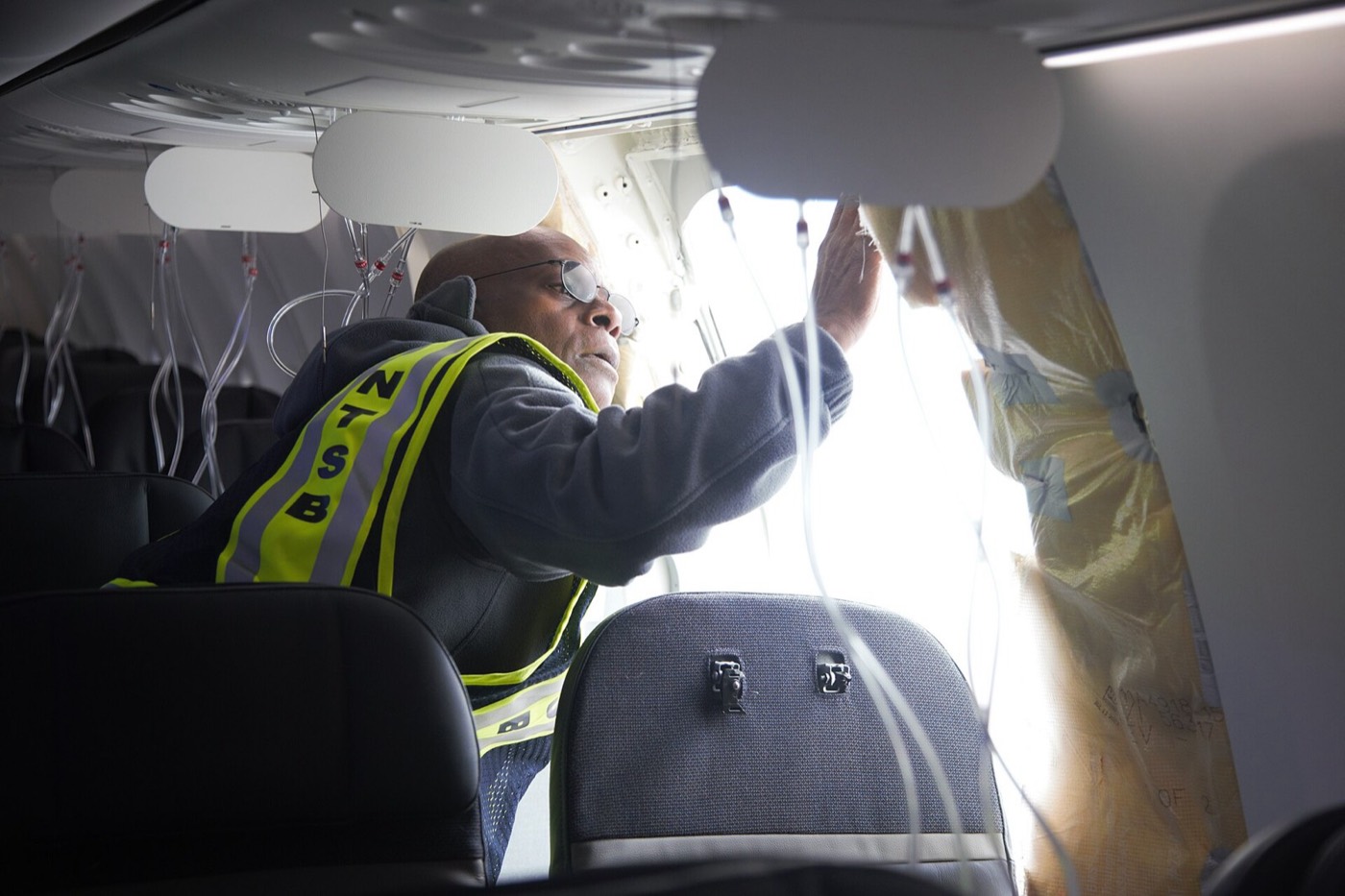
The next case shows what happens when the flaw investigators find is not in one aircraft, but built into an entire type.
Lion Air Flight 610 crashed into the Java Sea. It was a Boeing 737 MAX, and it happened in October 2018. All 189 people aboard were killed. Less than five months later, Ethiopian Airlines Flight 302, the very same aircraft type, crashed near Addis Ababa. All 157 aboard were killed too.
Both investigations reached the same underlying finding. A new piece of flight-control software, called MCAS, was designed to push the aircraft's nose down automatically in certain conditions. It was reading data from a single angle-of-attack sensor, the instrument that tells the aircraft how steeply it is climbing relative to the air flowing past it. When that one sensor failed and fed the system bad data, MCAS repeatedly forced the nose down on its own.
Pilots who had never even been told the system existed could not diagnose what was fighting them in time.
The two crashes, only months apart, led to a worldwide grounding of the entire 737 MAX fleet. It began in March 2019, and lasted roughly twenty months in most countries. MCAS itself was redesigned to cross-check two sensors, rather than trusting a single one, before it ever acts.
The Ethiopian investigation's own report became part of the story it was trying to tell. When Ethiopia's investigators finally published their final report, both the American NTSB and the French BEA attached formal written objections to it, disputing parts of its analysis. Two of the very governments Annex 13 relies on to keep investigations honest disagreed, on the public record, with a third government's own account of what had happened to its own national airline.
9. Why flying is now so safe
Each of those investigations changed exactly one thing. Add them all up, decade after decade, case after case, and the record now looks like this.
ICAO's latest safety report covers 2025. It puts the fatal accident rate at 0.11 per million flights. That is down sharply from the year before, and a fraction of what it was sixty years ago. The number has fallen for six decades. Rounded window corners, crew resource management, stall-recovery training and redundant sensors all played a part. So did a long list of other changes this video has simply not had time to name.
In 2025, four fatal accidents killed 387 people worldwide in total. 260 of those deaths came from a single crash, the one this video turns to shortly. No single case in this video explains a global safety record built from thousands of separate, hard-won lessons. But nearly every one of those lessons started the exact same way. Something broke. An investigation found out why. And the finding was turned into a rule that outlived the crash that produced it.
10. Where the system is weak
That record has a genuine limit, and this video would be dishonest to leave it out of the story.
Malaysia Airlines Flight 370 disappeared in March 2014. 239 people were aboard. Despite more than a decade of searching, it has never been found.
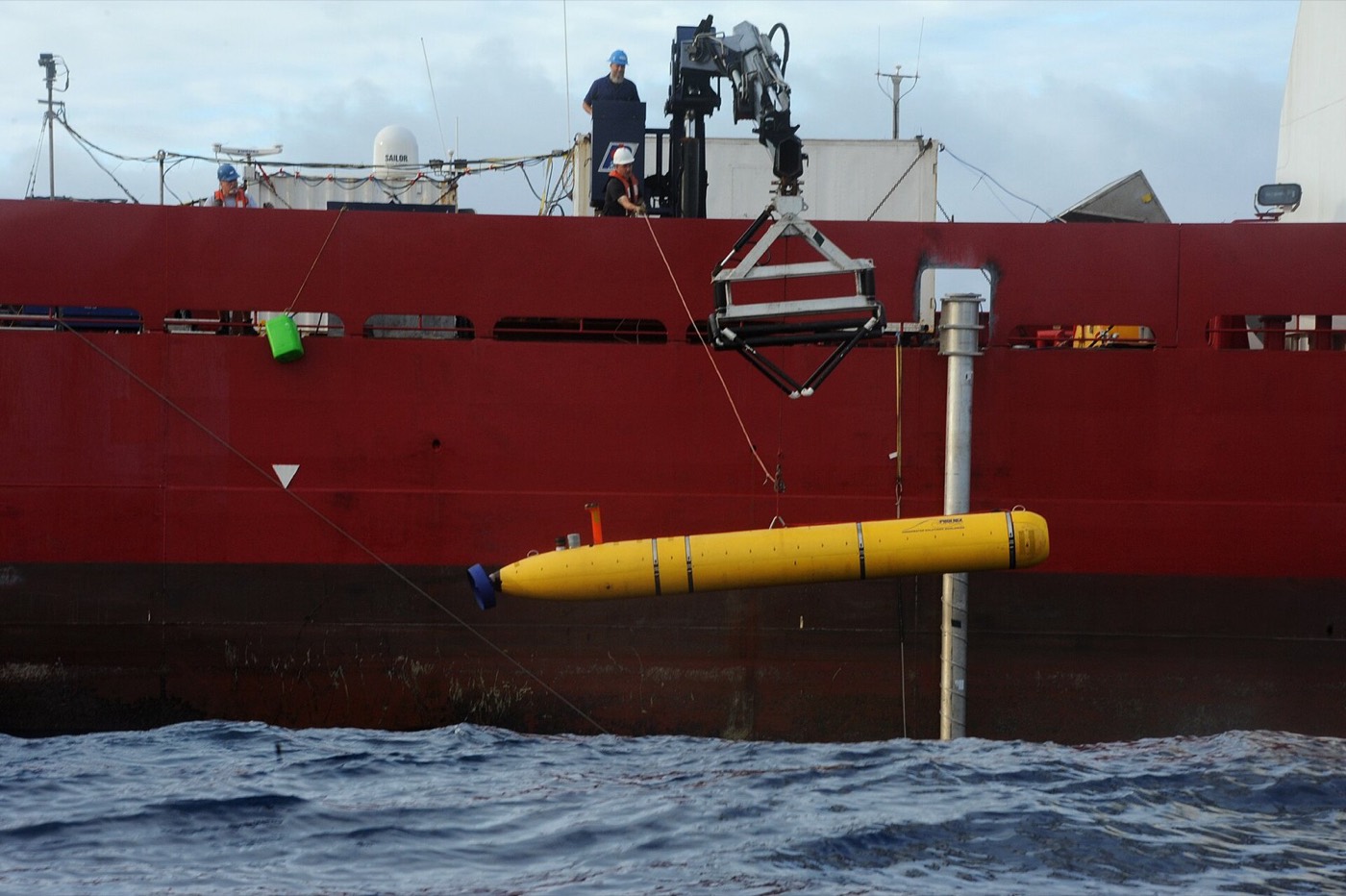
A private search firm, Ocean Infinity, scanned a further stretch of the southern Indian Ocean seabed, using the same kind of underwater survey technology described earlier in this video. That search ended in January 2026, without a result.
Beyond one missing aircraft, three specific weaknesses recur across the cases already covered in this video. Final reports that take years, not the twelve months Annex 13 aims for. That happened with Ethiopian 302. A formal process that lets the country under investigation comment on draft findings before they are published, which critics argue can soften conclusions about a state's own airline or its own regulator. And cockpit voice recorders on many aircraft still flying today that record only a two-hour loop, short enough to erase the most relevant cockpit audio if a flight continues for a while after the very event investigators most need to hear.
None of these are failures of the principle laid out two chapters ago. They are failures to fully apply that principle, in specific, nameable ways, decades after it was first written down in Chicago.
11. Air India 171: the test now
One of those cases is not finished. It is happening right now, as this video is being made.
Air India Flight 171 crashed moments after take-off from Ahmedabad, India. It was a Boeing 787, and it happened in June 2025. 260 people were killed, all but one of those aboard. India's Aircraft Accident Investigation Bureau found something specific, within a month. Both engines' fuel switches had moved from RUN to CUTOFF, one after the other, within about a second of each other, seconds after the aircraft left the ground.
The cockpit voice recording, as reported directly from the AAIB's own preliminary report, captured one pilot asking the other why he had cut off the fuel. The other pilot replied that he had not done so. Neither man is named in the AAIB's own report, and neither is named here.
India's government told its own Parliament, in July 2026, that no fault had been found in the physical switch mechanism itself. The AAIB then told India's Supreme Court that a draft final report was expected around October 2026. As this video was finished, that draft had still not been published, and a body representing Indian pilots had formally asked for a role in reviewing it once it finally appears.
Nearly every principle from earlier in this video is being tested on this one case, in real time. A preliminary finding, made public within a month of the crash. A government under direct pressure from its own courts and its own press to explain what its national airline's crew actually did. And a final report already sitting past the twelve-month mark Annex 13 sets as its working aim.
How that report finally reads, and how long the wait for it turns out to run, will say a great deal about whether the whole system this video has described is still working the way it was designed to.
12. Forwards or backwards?
So: is the system this video has traced, from a water tank in 1954 to a laboratory in Washington last month, still moving forwards?
One clear answer is yes. In February 2026, the FAA finalised a rule requiring 25-hour cockpit voice recorders on newly built aircraft, replacing the old two-hour standard. New aircraft must carry them from 2027, and existing passenger aircraft must catch up by 2030. It closes exactly the weakness named two chapters ago. It uses the same method this whole video has traced from its very first chapter. Something was found to be inadequate, and eventually the rule changed to fix it.
The other answer sits right beside it, and it will not go away just because the first answer sounds better. An aircraft that vanished in 2014 is still missing in 2026. A government's own final report can still take years, and can still draw formal written objection from other governments reading the exact same evidence. Right now, a state is investigating a crash that killed 260 of its own citizens, on its own national airline, under its own scrutiny.
Courts, pilots and the public are all waiting to see whether the finding matches the flight recorder, or the flag painted on the tail.
This video's own judgement, not a settled fact: the machine built after Chicago in 1944 still works, case after case, largely the way it was designed to. What is not yet settled is whether it can work fast enough, and independently enough, on the cases that matter most to the very states responsible for investigating them. That is the test Air India 171 is still sitting, right now, while this video is being watched.
Sources and credits
Photo credits (Wikimedia Commons)
- NTSB crash site of 21 Air Flight 7598, the Miami 767 overrun, 8 Sept 2026: National Transportation Safety Board, Public domain - https://commons.wikimedia.org/wiki/File%3A21_Air_Flight_7598_crash_site.png
- BOAC de Havilland Comet 1 G-ALYP (Yoke Peter), lost off Elba 1954: Originally Photographer Unknown, Public domain - https://commons.wikimedia.org/wiki/File%3ABritish_Overseas_Airways_Corporation_-_de_Havilland_DH-106_Comet_1_G-ALYP.jpg
- Dr David Warren with his first prototype flight recorder: Uploaded first to de.wikipedia: 18:30, 27. Apr 2004 . . Avatar (Diskussion) . . 600 x 593 (43672 Byte) (Dave Warren - Erfinder des Flugschreiber mit einem Proto, Public domain - https://commons.wikimedia.org/wiki/File%3ADave_Warren_with_BlackBox_Prototype.jpg
- NTSB recorder specialist examining the cockpit flight recorder circuit card, UPS Flight 2976 crash, Nov 2025: NTSBgov, Public domain - https://commons.wikimedia.org/wiki/File%3ANTSB_recorder_specialist_examines_the_circuit_card_assembly_from_the_cockpit_flight_recorder_from_the_UPS_MD-11_freighter_crash_was_performed_in_the_NTSB_vehicle_recorder_laboratory_in_Washington%2C_D.C._on_6_November_2025.jpg
- Wreckage on the runway at Los Rodeos after the Tenerife airport disaster, 27 March 1977: Unknown; uploaded to commons by User:Mr.Nostalgic in light of a donation by the Dutch National Archives, CC0 - https://commons.wikimedia.org/wiki/File%3AHet_verongelukte_KLM-toestel_De_Rijn%2C_Bestanddeelnr_929-1005_-_cropped.jpg
- Air France A330 F-GZCP, the AF447 aircraft, May 2009: Wim Callaert, CC0 - https://commons.wikimedia.org/wiki/File%3AF-GZCP_Aircraft.jpg
- AF447 wreckage (vertical stabiliser) recovered from the Atlantic, June 2009: National Transportation Safety Board, Public domain - https://commons.wikimedia.org/wiki/File%3AWreckage_of_F-GZCP.jpg
- NTSB investigation of the Boeing 737-9 MAX (Alaska Airlines Flight 1282 door-plug incident), Jan 2023: NTSBgov, Public domain - https://commons.wikimedia.org/wiki/File%3ANTSB_investigation_of_the_January_5%2C_2023_accident_involving_Alaska_Airlines_Flight_1282_on_a_Boeing_737-9_MAX_-_5.jpg
- U.S. Navy lowers the Bluefin-21 submersible to search for MH370, Indian Ocean, April 2014: Official U.S. Navy Page from United States of America, Public domain - https://commons.wikimedia.org/wiki/File%3AThe_U.S._Navy_assists_in_the_search_for_Malaysia_Airlines_flight_MH370._%2814049585751%29.jpg


Primary sources
- ICAO, Convention on International Civil Aviation (Doc 7300), Article 26 - the 7 December 1944 Chicago Convention requirement to investigate.
- ICAO Annex 13, Aircraft Accident and Incident Investigation, 13th ed., 2024 - first adopted 11 April 1951; the 'sole objective... prevention' / 'not... to apportion blame' text; the 30-day preliminary and 12-month final report targets; the state-comment procedure.
- UK Ministry of Transport and Civil Aviation, Report of the Court of Inquiry (Cohen Report), presented to Parliament February 1955 - the Comet G-ALYP loss, the RAE Farnborough water-tank fatigue test, and the window-corner finding.
- Defence Science and Technology Group (Australia) and Museums Victoria - David Warren and the ARL Flight Memory Recorder, 1953-58; Australia's 1967 CVR mandate.
- Spanish CIAIAC, Tenerife accident final report, 1978 - the 27 March 1977 KLM/Pan Am collision and its cockpit-communication finding.
- BEA (France), Final Report on the accident on 1st June 2009 to the Airbus A330-203 registered F-GZCP, published 5 July 2012 - AF447's cause, the May 2011 recorder recovery near 3,900 m, and the stall-training and pinger-duration recommendations.
- KNKT (Indonesia), Lion Air 610 final report, 25 October 2019; EAIB (Ethiopia), Ethiopian 302 final report, December 2022, with NTSB and BEA comments appended - the MCAS finding and the formal dissent.
- US House Committee on Transportation and Infrastructure, The Boeing 737 MAX Aircraft final report, September 2020 - the March 2019 worldwide grounding.
- ICAO Safety Report 2025 Edition - the 0.11 per million departures 2025 fatal accident rate, down from 0.27 in 2024; 387 fatalities in 2025, 260 of them on AI171.
- India AAIB, Air India Flight 171 preliminary report, 12 July 2025, and Supreme Court submission, reported 15-16 July 2026 - the fuel-switch finding and the October 2026 draft-report expectation.
- NTSB, DCA26MA352 / press release NR20260909, 9 September 2026 - the Miami 21 Air 767 recorder findings, read within three days.
- Federal Register, '25-Hour Cockpit Voice Recorder (CVR) Requirement, New Aircraft Production', 2026-02110, published 2 February 2026 - the FAA's 25-hour CVR rule.
- Ocean Infinity, 'Conclusion of the search for Malaysian Airlines flight MH370', January 2026 - the 23 January 2026 search-phase end.
Not regulated financial advice.